Enough with the sports parks, right? How about a day spent in a real park?
That's just what I was thinking the Saturday I grabbed my loaner bicycle and headed out for Musashino-no-mori Park, which is just about a five minute ride from my hotel. The road there is lined with cherry trees, which were in full bloom.
The spring winds had already begun to tear the petals from the trees, which made it look like it was snowing flower petals. Very beautiful.
The park has manicured areas with more trees, which make ideal spots for picnicking.
It also has landscaped areas meant to play in, like this maze of trees and shrubs where kids and their parents chased each other around. There were four or five families in there running around when I passed by.
Out in some of the open spaces, groups gathered to throw a baseball, a Frisbee, or just enjoy the sunshine. These guys--old timers all--got together to fly little rubber band-powered airplanes. As I watched, more and more of them rode up on their bikes with boxes of planes in tow.
I got this shot of one of their boxes, its contents revealed, when they all stepped away. See the little airplane tails sticking up? That's a box full of little wood and paper airplanes. I tried to snap some shots of the airplanes in action, but they were too small and fast for me to capture anything more than a blur.
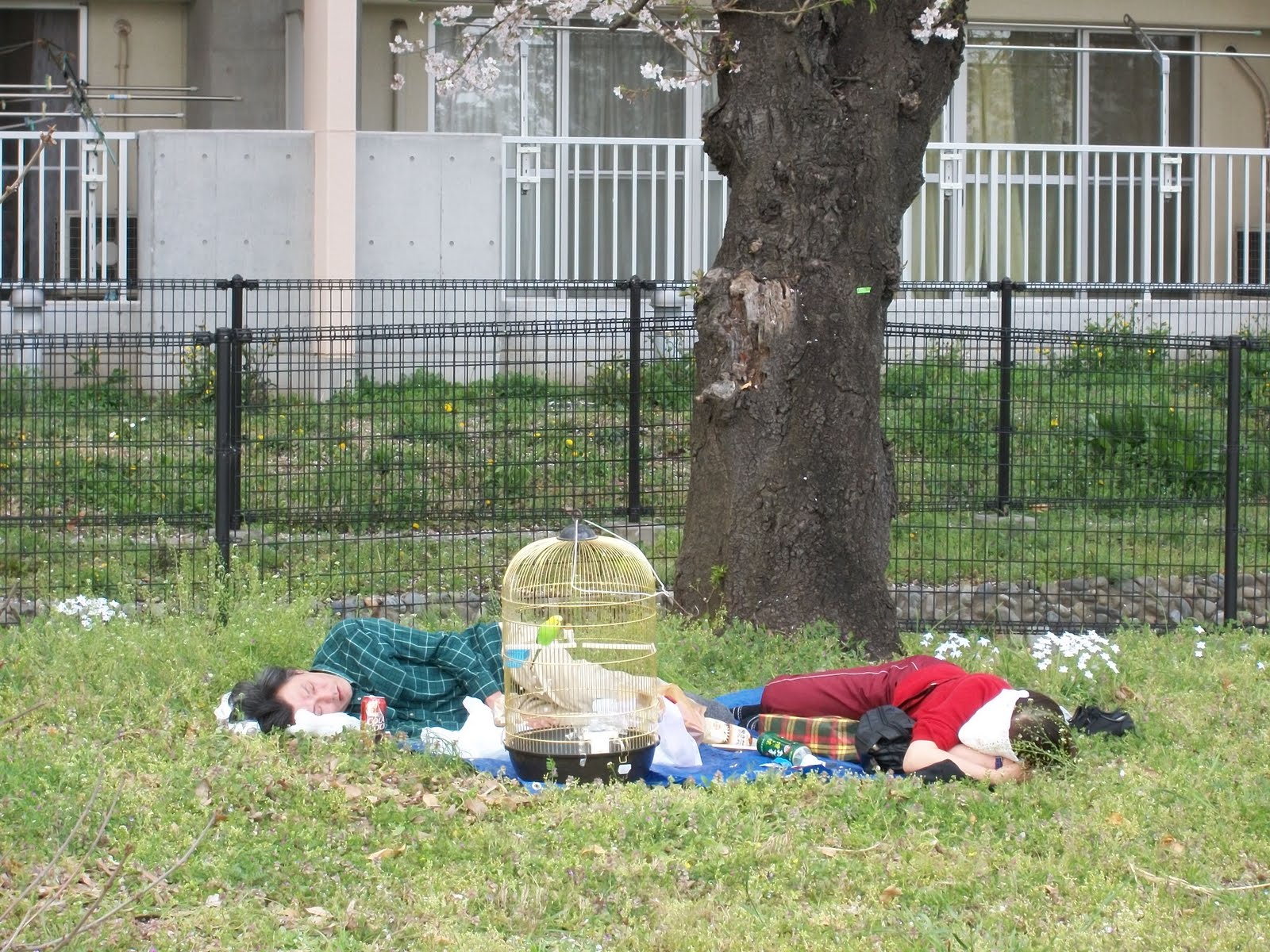
This couple took the warm spring day as an opportunity for a nap--with their pet bird in its cage along for company.
Many people come to Musashino-no-mori to planewatch, as the park circles a small airfield. Planes take off with surprising regularity, as this airport is one of the few in Tokyo to service the outlying small islands off the east coast.
I caught this plane as it was taking off for islands unknown. (Well, unknown to me at least; I hope they know where they're going.) This park is very near the school where I'm working, ASIJ, and so we see and hear planes flying in over the athletic fields on campus all day long. They're small enough that you only hear them occasionally outside, and while in the park I only noticed when the path of the planes took them landing or taking off right over where I was standing.
Due to Musashino-no-mori's proximity to the airport, kite-flying is discouraged. I like the kite in this sign though. It looks very mischievous.
The airfield was built in 1939 as a private landing strip, but was quickly snatched up by the Japanese Army Air Force as Japan was at war on the continent, and soon after in the Pacific. After declaring war on the United States, this became an important Japanese airfield because airplanes were manufactured nearby and delivered from here. As the United States closed in on mainland Japan toward the end of the war, concrete bunkers were built to protect what few airplanes the Japanese air force had left from American firebombing.
Today a few of these bunkers survive, and are well-documented for visitors in both Japanese and English. (That's my bike leaning up against the sign. Alas, it has no kickstand.)
As the United States approached, the Japanese geared up for what they felt was an inevitable invasion of their mainland. Rather than be sent to the front, the remaining planes here were protected in the bunkers as last-ditch weapons to use when the attack came on the mainland. What the Japanese had no way of knowing, of course, was that the atomic bombs dropped on Hiroshima and Nagasaki would obviate all their plans.
This one had a mural of a Japanese airplane painted on it to demonstrate how it had been used.
And there was a nice copper (?) statue showing a cut-away of the make-shift hangars. They were barely big enough to push a plane into.
Out and around the park, I began to notice these water pumps. They're not for drinking water, best I can tell; they're for washing off your feet. Or washing other things, I guess, but the Japanese are fairly obsessed with shoes and dirt, and so I figure this has something to do with not tracking the dirt and mud of the park home with you. The nearby baseball practice fields had these all over the place.
A strange monument deeper into the park, featuring rocks of all kinds, as though it were a mineralogical study. I liked these big rocks with hiragana on them. I'm pretty sure that's hiragana; I think the fifth one down is the syllable "no." Does this say Musashino-no-mori? Or just Musashino, since there is only one "no"? I'm picking up a couple of syllables here and there, and a couple of kanji, but otherwise I'm still totally lost. (In retrospect, comparing what is written here to what is written in Japanese on the park entrance sign, I do not think this says Musashino-no-mori.)
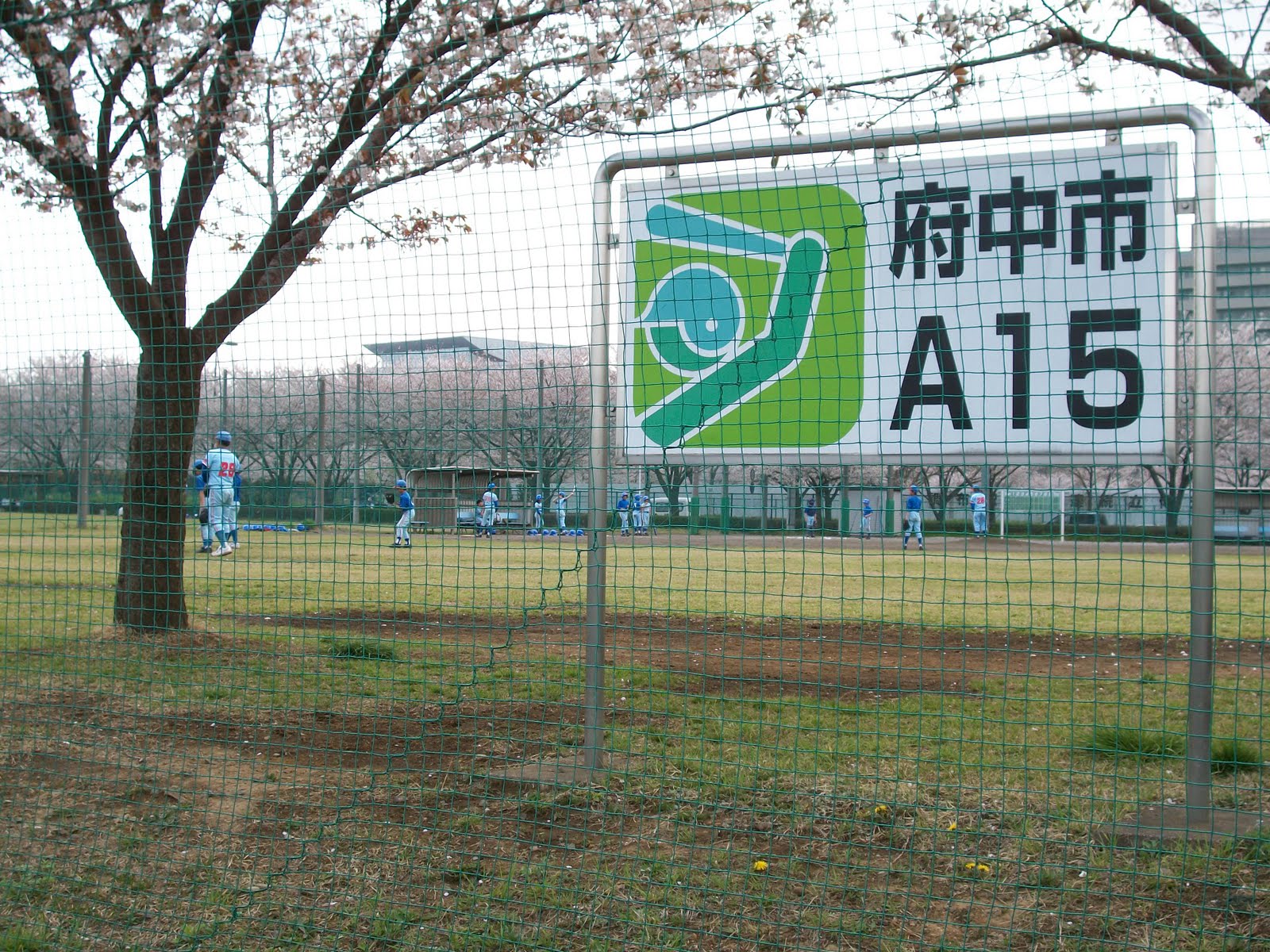
Just past the main park was baseball field after baseball field.
What, you didn't think I could make it through a post about Japan and not put in some baseball, did you? ;-)
Many of the fields backed right up to the airport, as you can see in this shot.
The fields often had a series of ramshackle buildings along the foul lines. I later understood that these were the places where the teams and families hang out all day, as Japanese teams regularly practice from about six in the morning until five or six at night on both Saturday and Sunday, weather permitting. The moms hang out in these huts, often with the coaches while the kids on the field organize their own workouts and practices, and the moms serve food and drinks all day to the kids and the coaches.
There was an actual game going on the next field over.
These guys had kanji on the backs of their jerseys. (Sorry for the big pole. It's the only way I could get the shot.)
At the end of every half-inning, the teams run over and huddle up in front of the bench, where they hear words of advice, or perhaps scorn, or perhaps encouragement, from their head coach. (See him sitting there on the bench?) He barks at them for a half a minute, and then they bow and thank him for the knowledge before running to bat or back into the field. I know a couple of American youth baseball coaches who probably wish their kids listened as attentively as these players did.
Even though the kids are there all day, they're not out there running and practicing and working all twelve hours. It's more like a day spent at the park, with the occasional drills mixed in. Here a couple of young players from a Chofu little league team enjoy their lunch under the cherry trees.
Kids are roaming around everywhere, going to the bathroom, getting a drink or a snack, and visiting with their friends. Talk about keeping kids out of trouble--if they play baseball, their weekends are almost entirely planned out.
Some of the moms and coaches, hanging out in one of the service huts next to the field. The kids were out practicing infield while this guy was having some noodles.
Another team, working on batting and fielding drills at the same time. After watching variations of this on field after field after field (seriously, there are about thirty fields in this complex, with kids on them this day ranging from tee-ball age to high school) it was hard to understand why the Japanese aren't the worldwide kings of baseball by now. Their dedication to the sport at the youth level is absolutely unrivaled anywhere. They practice like this year-round, and when a kid decides to play baseball, he plays nothing else. Then again, the Japanese have won the
World Baseball Classic now each of the two years it has been played, so perhaps they
do rule the baseball world after all.
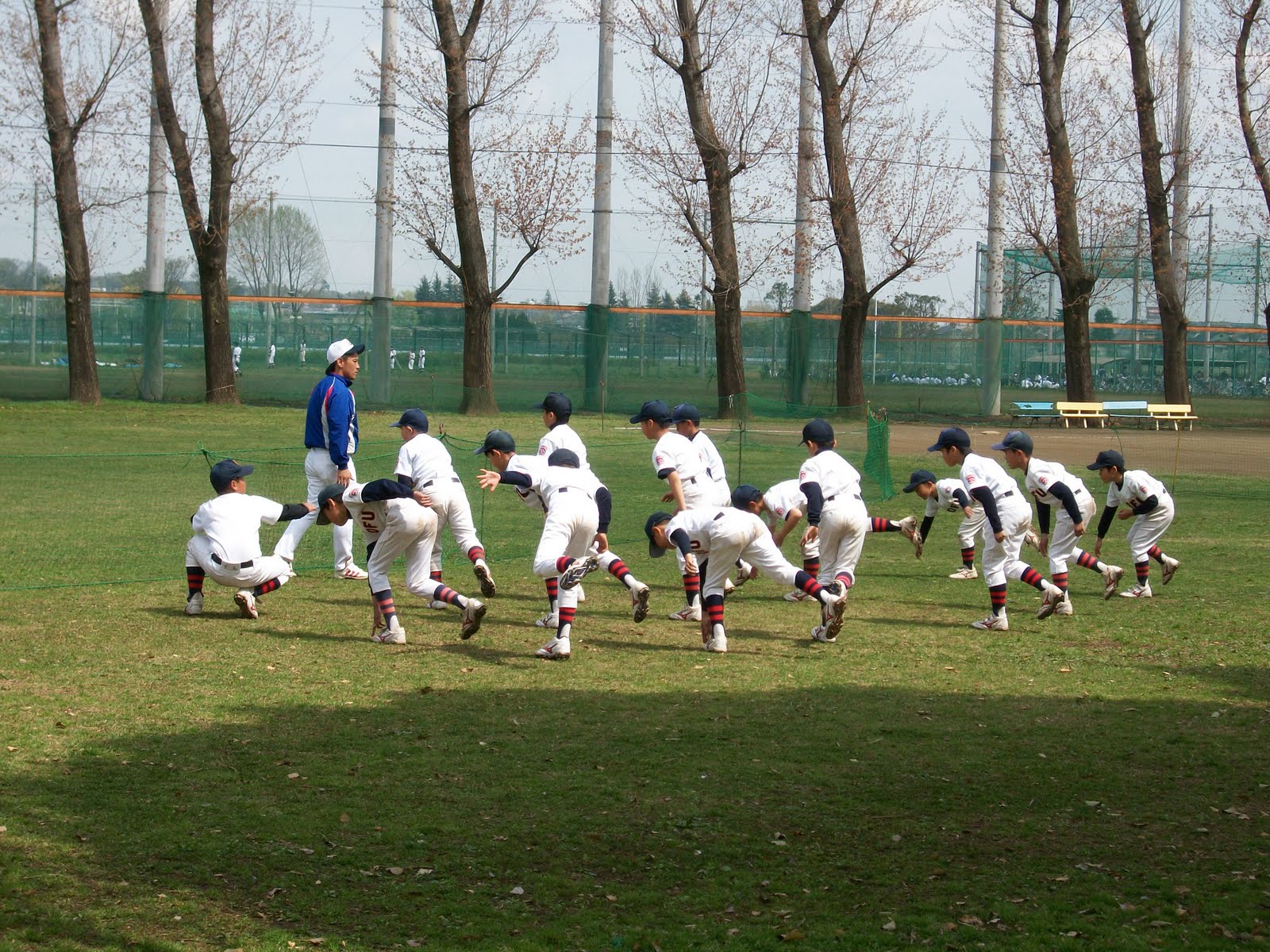
Little leaguers, leading their own stretches. They were having a good time too, laughing and making jokes about each other while still getting their stretches done. There may be a lot of discipline to these days, but I heard lots of laughter and chit-chat too. The old stereotype of the "bloody urine" practices (practices that were so hard that the boys had blood in their pee after practice) simply aren't the case--at least not in the Chofu little league system. I can't speak for the more intense high school baseball practices on teams expecting to go to
Koshien.
A couple of young parents, hanging out at the field all day while their child practices. There are some girls involved in youth baseball, but only up to a certain point. There is a girl at ASIJ who is good enough to be on the ASIJ junior varsity baseball team, and who will most likely play on the ASIJ varsity team when she is old enough. She grew up here, and played Japanese youth baseball for a while, but once she got to be a middle schooler the boys in Japanese youth baseball stopped accepting her. They hid her glove, they made practice difficult for her, and the other teams wouldn't pitch to her the same way. She eventually quit playing Japanese ball, and now just plays for ASIJ.
Recent winners from the Chofu little league. They're holding that flag up backwards, but if I had to figure out which way to hold up a flag with Japanese writing on it, I'd probably have it upside down
and backwards.
Another of those water pumps, this one with a sign with great art saying not to drink the water.
A father and sun playing catch in the shadow of Ajinomoto Stadium, where I went to see the soccer match. The picture could only be more perfect if they played baseball in that stadium there instead.
A balance drill, this one led by the coach. The kids practiced throwing in slow motion, and he would freeze them to make them balance. On another field, I saw the kids playing something akin to "Simon Says" as a sanctioned practice, getting the players to focus and be active at the same time.
Ever now and then, I would see players marching around a field like soldiers, chanting and singing in step to the run. Parents and coaches clean up the infield while they run in the outfield grass.
Japan loves its gardens, and even here, on the edges of the baseball fields, many were planted with flowers. Some even had vegetable gardens planted alongside. I liked this one, with it's border of old baseball helmets. Although it did have the feel of a cemetery of baseball players who couldn't cut it...
Another field, with the bikes the kids rode to get to practice parked outside.
Baseball wasn't the only sport being played that Saturday--though it was by far the most popular. Japan is also pretty crazy about its soccer, and has been ever since sharing host nation status with South Korea during the 2002 World Cup.
A soccer coach has a casual conversation with his players after a practice.
College-aged players play with a backdrop of sakura and the Metropolitan Police Academy.
I ran into this sign above a group of low soccer fields, and to this day I'm still not sure what it's trying to tell me. That in the event of severe rain, the fields can flood? But what's with that wave? Whatever it's trying to tell me, I think I'll avoid the place during typhoon season.
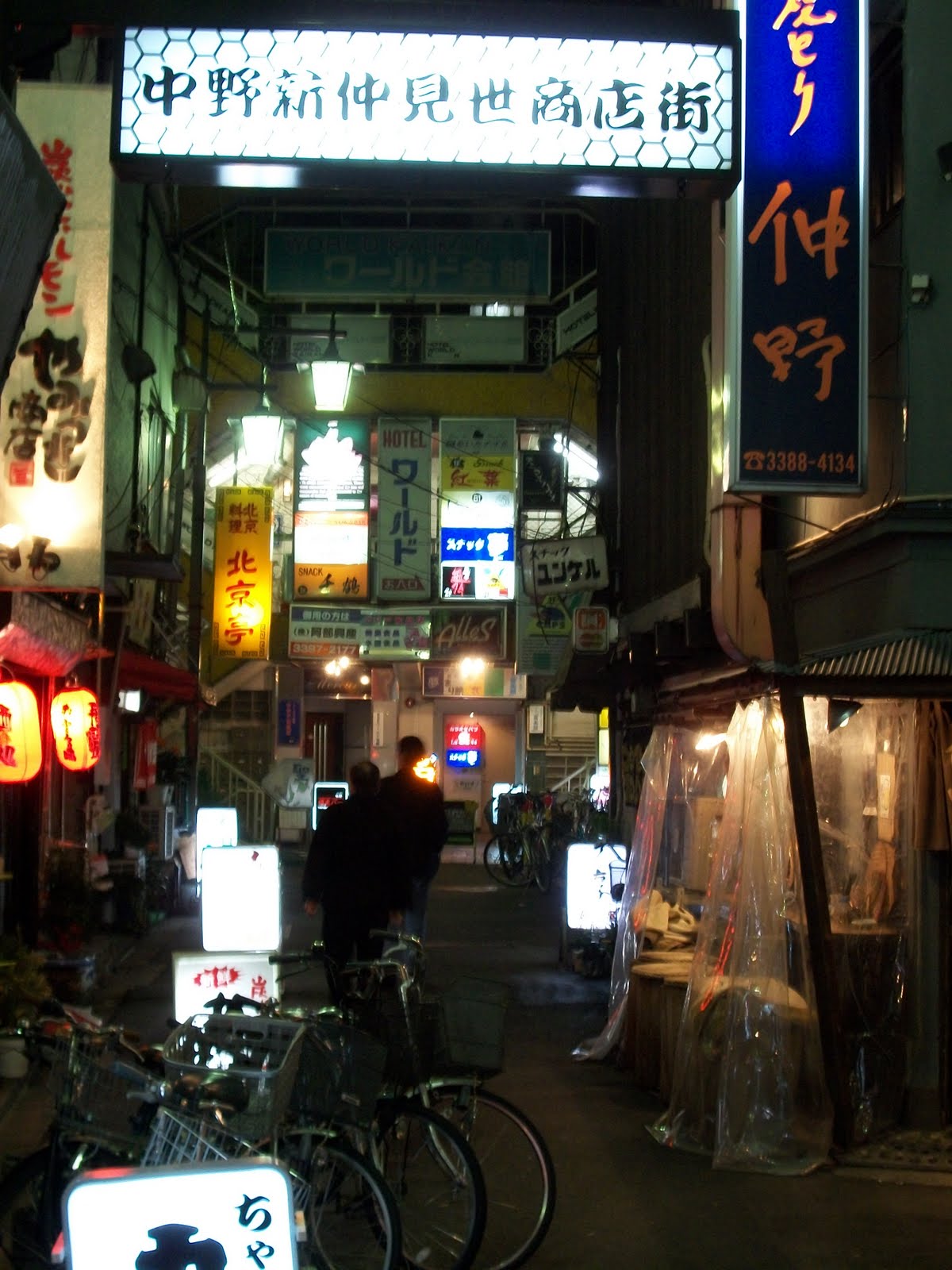
Next up, exploring the hip urban neighborhoods of Shimo-Kitazawa and Nakano, and I take a trip to legendary Harajuku.
Read more...